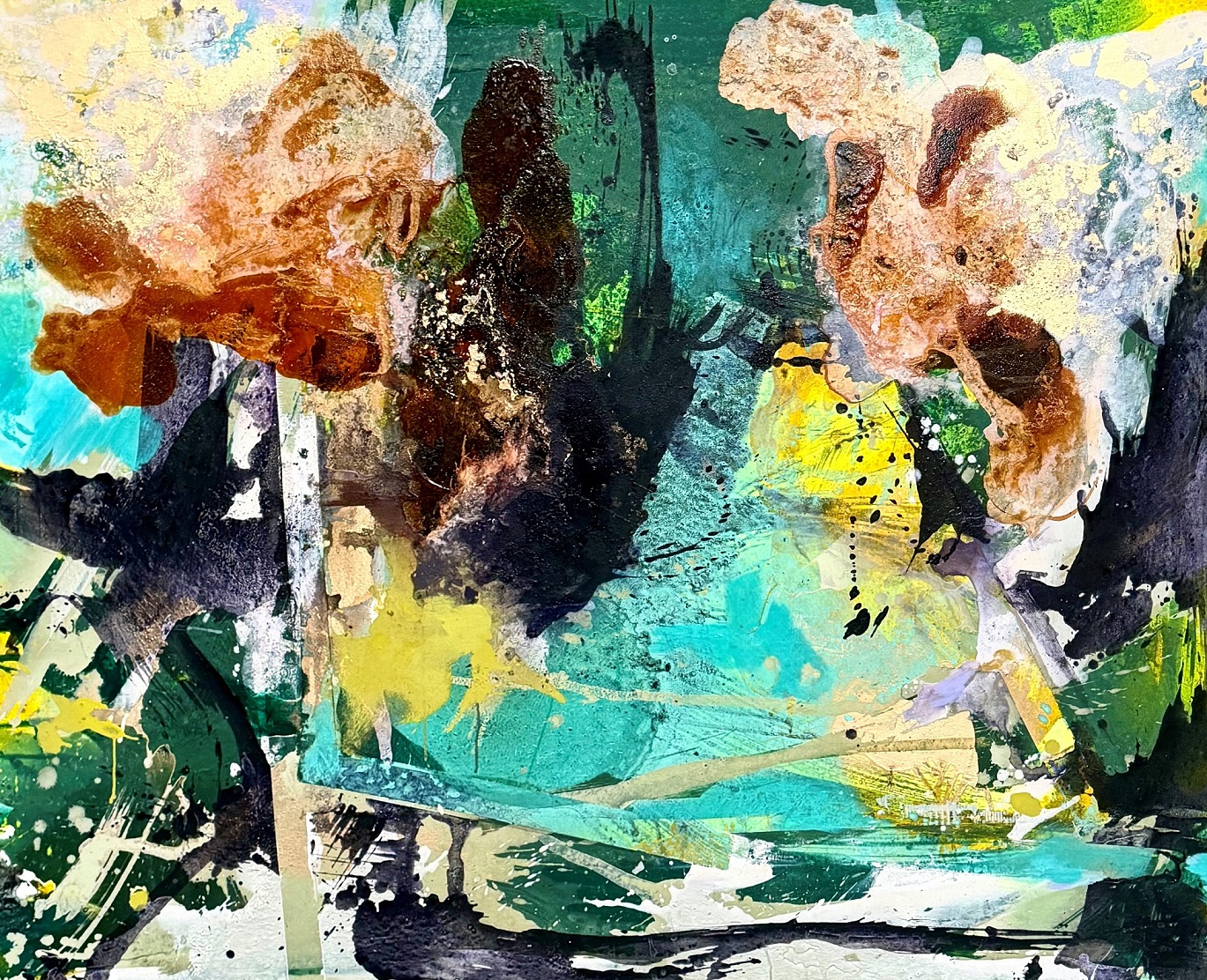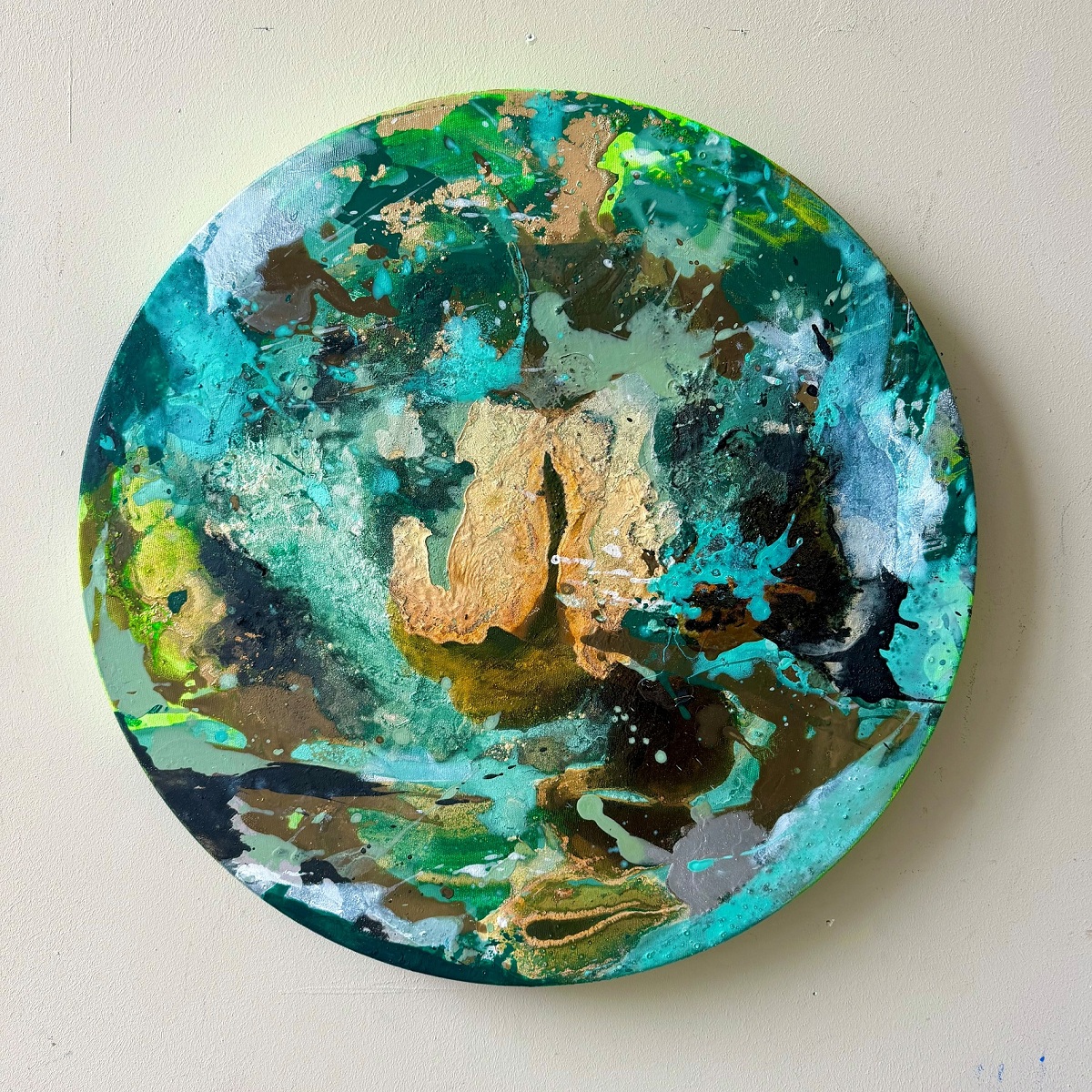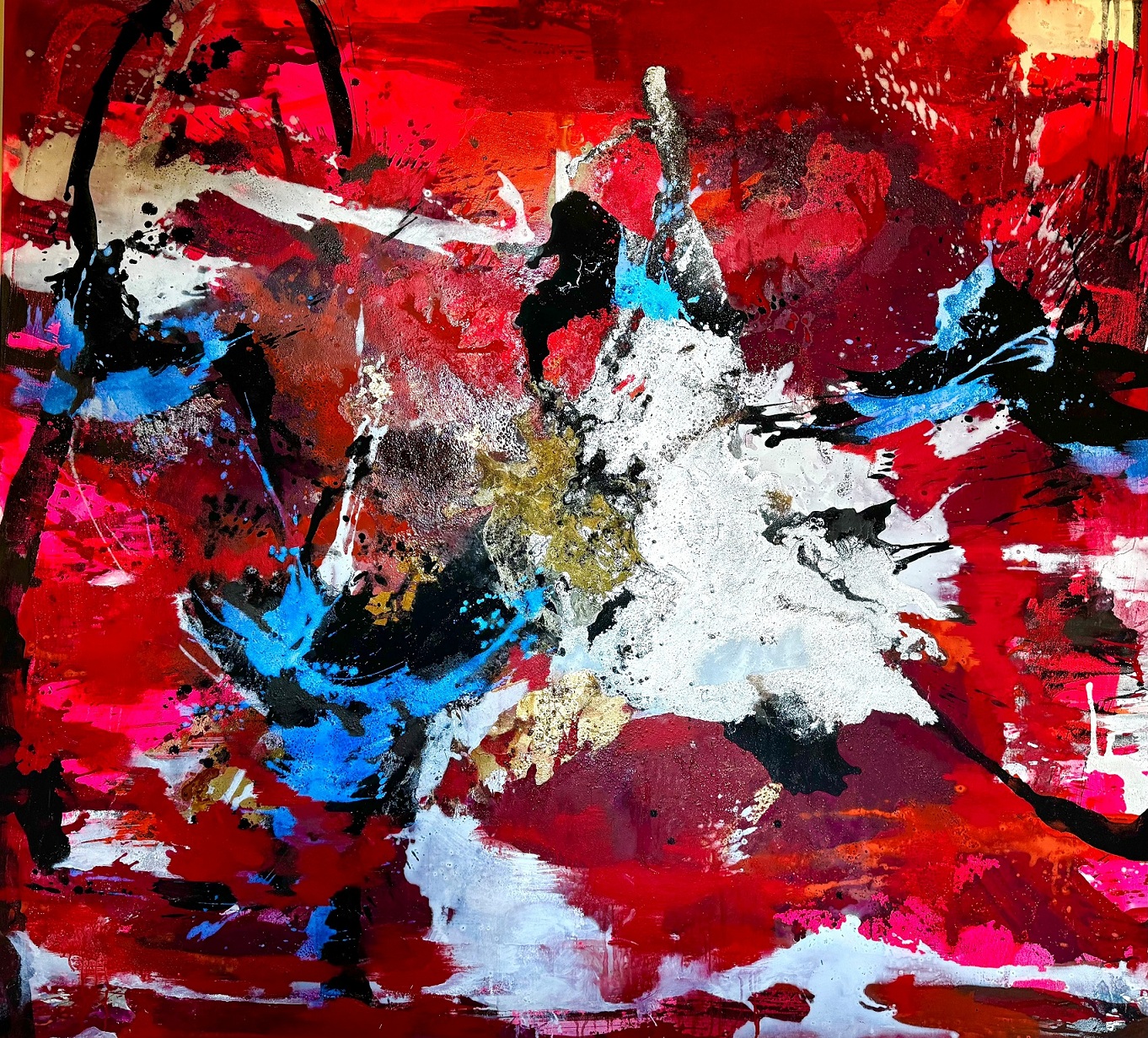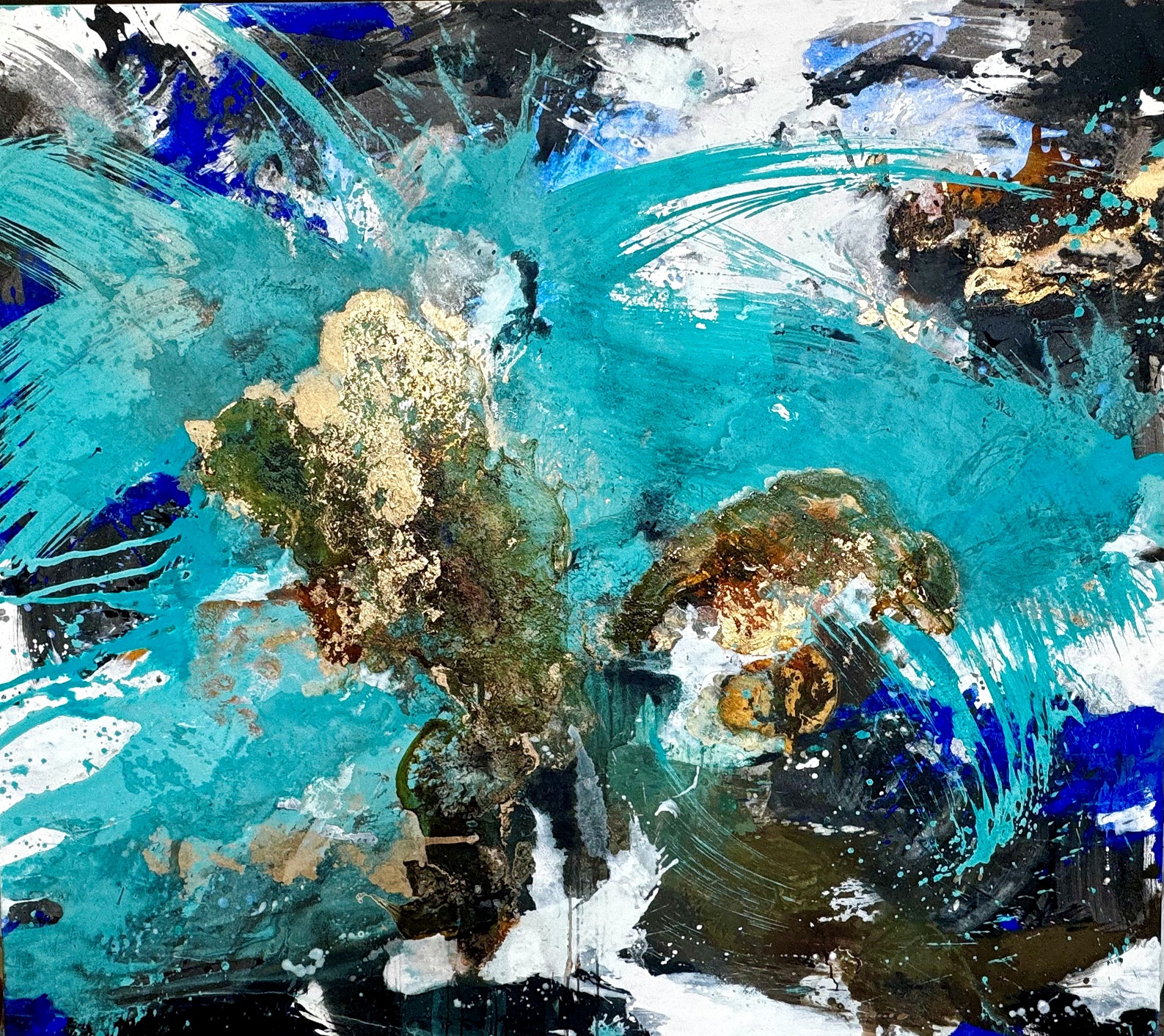


Post-war informal painting increasingly freed the picture from the depiction of recognisable objects and from preconceived compositional plans. Colour became a visual force in its own right. Ernst Wilhelm Nay, Willi Baumeister and Jackson Pollock represent different approaches to gestural and informal abstraction, which we will examine at the start of the seminar.
The practical work centres on the painting process as an interplay of action and reaction. Through targeted experimental steps, we use colour as the driving force behind the creation of the image and explore how a distinct visual order can emerge from gesture, layering and chance. We will be working with water-soluble paints. By using a variety of brushes – ranging from narrow, fine ones to broad, bold ones – and through the technique of overpainting, we experiment with different painterly effects. The canvases should measure at least 80 × 100 cm.
Music accompanies the creative process. Rhythm, timbre and chords provide inspiration for painterly movement and colour composition. Through dialogue with these musical structures, participants expand their painterly vocabulary and develop a personal style in which traces of inner and outer worlds can become visible.
We will explore how paintings create atmospheres and have an impact on the room beyond the canvas. Group discussions will help participants to reflect on their own creative decisions and on the openness of the painting.
A basic knowledge of painting is required.